


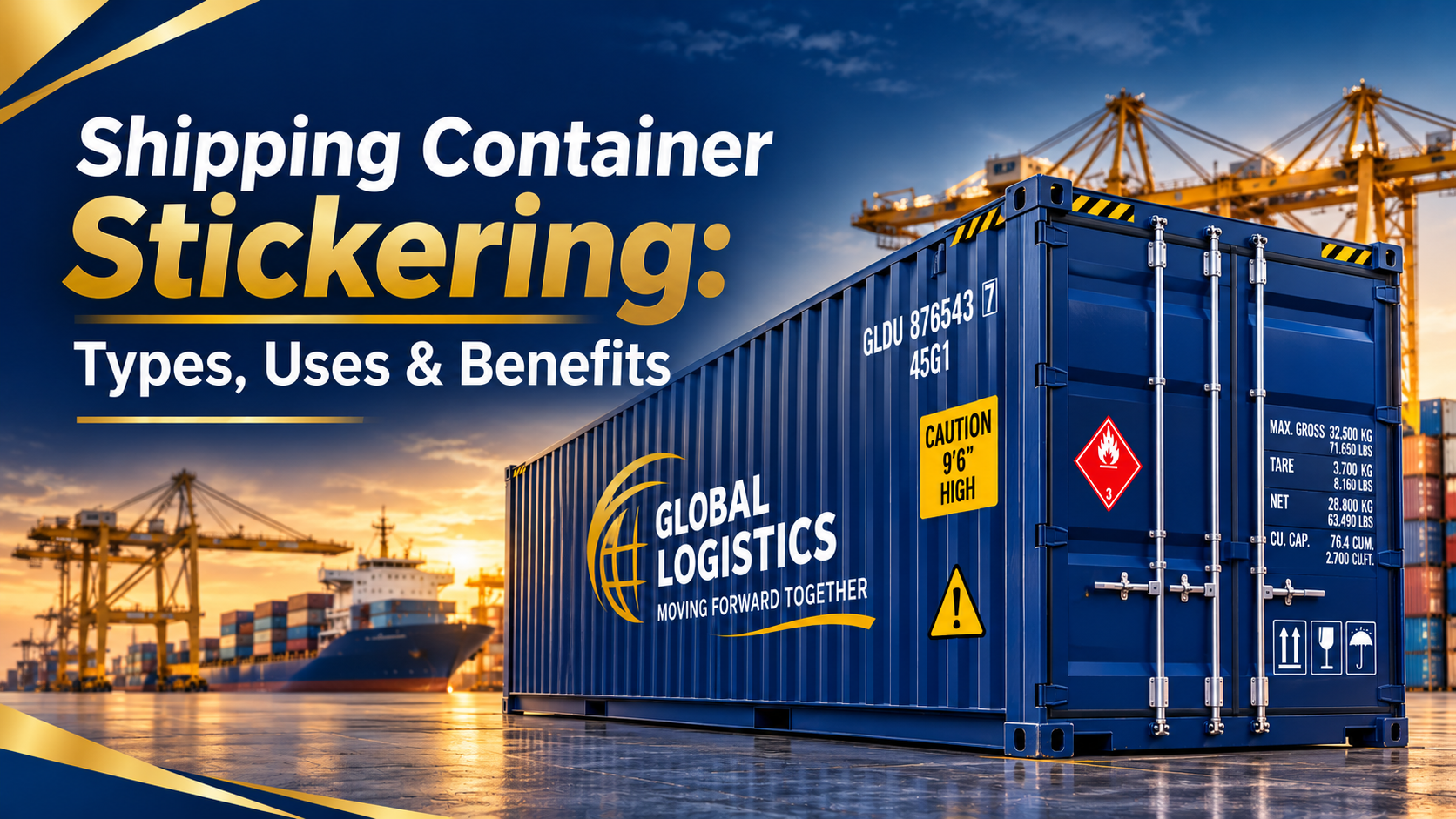
Shipping Container Stickering is a procedure of designing the vinyl graphics, company logo, customized lettering and labels that are added to the surface of shipping containers to mark them for branding and identification.
Vinyl stickers are ideal for shipping container branding to ensure that logistics companies keep their branding uniform, can display certain information and can add a recognisable identity to their fleet.
The right stickers are based on the surface of the container, operating conditions, and intended application.
What Is Shipping Container Stickering?
Shipping Container Stickering is a technique that involves the application of adhesive vinyl graphics, lettering, logos, and selected labels to the surface of a container for branding, identification, and communication.
Vinyl stickers are often used in businesses for the following purposes:
- Showing a company's name and logos.
- Incorporating personalised lettering and graphics.
- Displaying certain identification information.
- Developing a uniform brand identity for container fleets.
- Correctly labelling and presenting operational information.
Vinyl stickers are versatile in terms of design, colour, size, and use. Printed vinyl graphics can be changed or replaced in areas without having to repaint the entire area, as with painted graphics.
Stickers are not a substitute for all conventional container markings, however. Any information that is required, such as identification details, technical data, and data related to safety, shall comply with the appropriate requirements. These may be stencilled, be affixed to plates or approved labels or other means depending on the information.
Types of Vinyl Stickers and Container Markings
There are various kinds of stickers and markings that are used in various shipping and logistics processes. Some advertise for the company; others relay identification information or safety information.
1. Company Logos and Branding Stickers
Custom vinyl stickers are perfect for shipping lines and logistics companies to print their company names, logos, colours, and other brand elements on the surface of the shipping containers.
These visuals will contribute to a unified visual brand for container fleets. Branded surfaces add to the visibility of companies as the containers are transported between ports, terminals, warehouses, and transportation networks.
2. Custom Lettering and Graphics
The custom vinyl lettering option enables businesses to print company names, text, numbers, and more without solely using painted designs.
The applications can be customized to fit various container sizes, branding needs, or layouts. Custom graphics are also great for businesses to ensure that they have the same look across different types of containers.
3. Container Identification Labels
Selected container details can be identified with identification labels and/or lettering, where appropriate.
These can include pertinent identification data, ownership information, or other operational references. The format and placement shall be the same as per applicable container identification requirements.
4. Safety, Warning Labels
Safety-related labels are used to provide hazard information, handling information, and other important information.
Depending on the cargo and applicable requirements, containers may be labeled with dangerous goods labels, warning symbols, and handling instructions. These labels should be formatted correctly and be clearly seen and legible while performing their intended function.
Not everything that's labelled as safety is a typical decorative vinyl sticker. The suitable material, design, placement, and compliance requirements should be taken into account.
5. Technical and Operational Markings (TOMs)
Technical information for shipping containers, including the tare weight, maximum gross weight, payload, and size information.
These details assist the operators in understanding the specification and handling requirements of the container. They can be custom-branded, stencilled, marked plates, or appropriate labels, depending on the information and applicable standards.
Where to put vinyl stickers on a shipping container?
Depending on the design, surface and operational conditions, vinyl stickers can be applied to suitable surfaces on the outside of a container.
These are typical applications:
- Side panels: Good for larger logos, company names and graphics for branding from a distance.
- Container doors: Will accept company names, custom lettering and specific visual information, as long as the existing markings are not blocked.
- Other suitable exterior surfaces: May be utilized for additional graphics and branding on other surfaces as appropriate if surface and conditions allow.
The surface should be checked for dirt, rust, moisture, damaged paint and uneven areas prior to application. The existing identification information, safety markings and operating data should not be obscured or difficult to read.
Why use vinyl stickers when shipping?
Shipping containers are used in harsh outdoor conditions. During transport and storage they are subjected to the sun, rain, humidity, dirt, temperature variations, and mechanical stress.
Customised graphics and selected information can be transferred to compatible containers using vinyl stickers.
Their main benefits include:
- UV and Weather Resistance: Customised outdoor vinyl and weather protection can help resist exposure to different weather conditions, such as rain and sunlight.
- Adhesion: Appropriate adhesives will enable vinyl stickers to adhere to appropriate surfaces. Good surface preparation is essential for good application.
- Print Clarity: Good print enhances the recognition of company logos, lettering, numbers, and graphics.
- Size, Colour and Design: Vinyl stickers can be created in various shapes, sizes and colours to fit particular requirements for branding and identification.
- Update Replacement: Graphic designs can be changed or replaced without having to repaint the surface of the container.
Actual performance will vary with the vinyl material, adhesive, protective lamination, surface preparation, and exposure to the environment.
The Importance of Container Stickering for Logistics Companies
Several operational and business needs can be supported by consistent branding and unambiguous visual information for logistics businesses that have several containers.
Better Container Recognition
Consistent and clearly displayed identification information can help containers be recognised across operational sites. This helps to facilitate fleet management and will prevent confusion when dealing with handling.
Consistent Brand Visibility
Ports, terminals, warehouses and transportation networks are all utilised by branded containers. These locations help to reinforce the company's brand presence with company logos and graphics.
Clearer Visual Communication
Labels and markings are appropriate for conveying information to those who handle, inspect, and transport containers.
Professional Fleet Appearance
Uniform logos, lettering, colours and graphics provide a uniform look to container fleets. This is especially helpful for shipping companies, container operators, and leasing companies with multiple assets.
Why Shipping Container Stickers Last Long?
The longevity of a shipping container sticker is not just about the design itself; it's also about the material used and the printing process. Its performance depends on the properties of the material used, its compatibility with the adhesive, preparation of the surface, and the environment.
Here are the important factors to consider:
- Vinyl Quality: Select material suitable for the use and anticipated exposure to the outdoors.
- Adhesive Compatibility: The material used for the bond should be compatible with the container surface and should be able to provide a good bond.
- Outdoor Use: Materials to be used outdoors should be resistant to UV and weather elements.
- Additional Moisture, Abrasion & Surface Wear Protection: In certain applications, lamination can be used to add extra protection from moisture, abrasion and surface wear.
- Surface Preparation: The surface should be cleaned, dried, and suitably prepared for the application. Adhesion may be impaired by rust, dirt, moisture, and damaged paint.
- Print and Colour Quality: Appropriate colour contrast and clarity will ensure readability and consistency and support branding.
Taking these factors into account allows businesses to choose the appropriate vinyl sticker for their container branding and marking needs.
Vinyl Stickers vs. Painted Container Markings – Which One Is Better?
Vinyl stickers and painted markings can both be used in container branding and identification. Influencing factors are the purpose of marking, surface, and expected operating conditions.
|
Factor |
Vinyl Stickers |
Painted Markings |
|
Design flexibility |
Ideal for printing graphics, logos, and tailored designs |
Ideal for application as letters, logos, and markings |
|
Application |
Applied to surface to suitably prepared surface |
Needs painting/stenciling |
|
Design updates |
Selected graphics can be changed more readily |
Usually requires repainting |
|
Surface suitability |
Requires compatibility of adhesives and surfaces |
Requires compatibility and preparation of paint |
|
Branding |
Ideal for printing in depth for colour and graphics |
Ideal for logos, lettering and graphics in paint or lettering |
|
Best suited for |
Branded with custom applications and visuals |
Some long-standing or more sustained applications of marking |
Vinyl stickers are a great option for personalised branding, lettering and graphics. For some of the standard and/or long-term requirements for container marking, painted or stenciled markings might be more suitable.
There is no one method that is better than the other. The method that businesses choose should depend on the application and industry requirements.
Choosing the Right Container Stickering Partner
Container stickering is important for shipping lines, container operators, and logistics companies to ensure consistency of branding on their assets.
When choosing a creative and printing partner, you should take into account:
- Materials Knowledge: The provider should have knowledge of various vinyl materials and their ability to be used outdoors.
- Print Quality: Company logos, lettering, and graphics should be clear, accurate, and consistent.
- Size, Layout, and Branding Flexibility: The design should be flexible enough to fit various container sizes and be designed to fit the variety of layouts and branding requirements.
- Application Quality: Good surface preparation, positioning, and application are critical to achieving a professional finish.
- Brand Consistency: Multiple containers require consistent visuals from the business.
A good creative and printing company will be able to help businesses put their brand into a clear and consistent container graphic.
Frequently Asked Questions
1. Vinyl stickers are used on shipping containers for what purpose?
Company logos, branding graphics, selected identification details, custom lettering, and visual information are placed on appropriate surfaces of shipping containers with vinyl stickers.
2. Can vinyl stickers be used for outdoor shipping containers?
Yes. Shipping containers can be covered with special vinyl stickers that are designed for an outdoor setting and are made with the appropriate adhesive and protective coating. The suitability will depend on the material specifications, surface preparation, and environmental exposure.
3. What is written on a shipping container?
Identification numbers, codes for the owner, size and type, weight, and safety-related information are usually found on shipping containers. Other operational labels and company branding can be included as well.
4. Are shipping container stickers customisable?
Yes. Company logos, brand colours, lettering, size, and graphic design needs can all be catered to with vinyl stickers.
5. How long do vinyl stickers last on shipping containers?
They can last depending on the quality of the vinyl, the strength of the adhesive, the lamination, the surface preparation, and the environment they are exposed to. Standard indoor vinyl is not typically appropriate for demanding applications, whereas outdoor-grade materials tend to be more appropriate.
6. What is the difference between container stickering and container marking?
Marking in containers refers to a range of information including identification codes, technical specifications, safety information and other requirements needed. 'Sticking containers' refers to placing adhesive labels or vinyl graphics on the container to show the information or branding you choose.
7. Will painted container markings be replaced with vinyl stickers?
Not necessarily in all cases. Vinyl stickers can be useful for applications that require custom branding or appropriate visual applications, and painted or stencilled markings can be required and/or more appropriate for certain standard container information. All applicable marking and regulatory requirements should be adhered to.
Container Stickering and Branding Solutions by Vink Designs
Vink Designs provides custom branding of containers by businesses, including logos and lettering and printed vinyl container graphics.
Want to create a brand for your container business? Get in touch with Vink Designs to discuss your requirements.
Our trusted IT practices are designed to enhance operational efficiency, ensure data integrity, and provide peace of mind through proactive security and strategic planning. From implementing reliable backup solutions to safeguarding your network against emerging threats, we help businesses.